
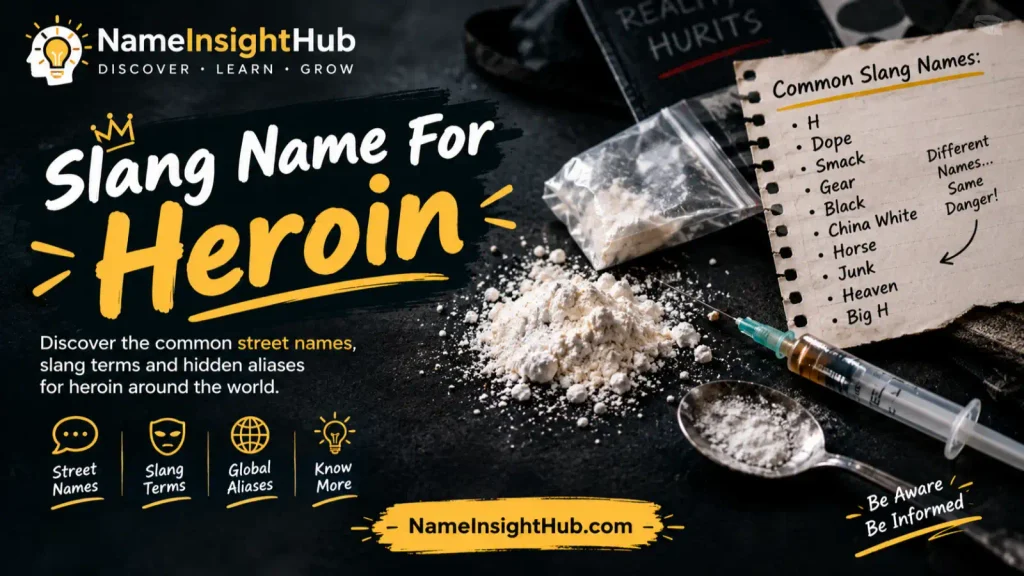
Heroin is known by many slang names, and these terms can vary by location, age group, and social setting. You may come across them in news reports, medical discussions, documentaries, books, or conversations about substance use.
Understanding the language can help you recognize what someone may be talking about without making assumptions based on a single word.
Common street names for heroin include smack, dope, junk, H, and brown sugar.
However, some of these terms are also used for other drugs, and their meanings can change depending on the context. A slang term alone cannot confirm what a substance contains.
Common Slang Name for Heroin

Several English-language slang terms have been associated with heroin for decades. Some appear in older books and films, while others remain in conversations about illicit drug use.
The following terms are commonly documented in drug education and public health resources.
- Smack A well-known street name for heroin in the United States.
- Dope A broad term that may refer to heroin or other drugs, depending on context.
- Junk A longstanding slang term associated with heroin and problematic drug use.
- H A shortened form of heroin.
- Brown sugar A term sometimes used for brown-colored heroin, though it does not reliably identify a substance.
- Horse A traditional slang term associated with heroin.
- Skag An older informal term for heroin.
- Black tar A description associated with a dark, sticky form of heroin.
- Harry A slang term documented in some English-language drug terminology.
- China white A term historically associated with certain white powders, but its meaning varies and it may refer to potent synthetic opioids rather than heroin.
These words are not precise chemical descriptions. For example, a person using the word dope may be referring to a different substance entirely.
Important: Street names cannot establish the identity, strength, or purity of an unknown drug. Illicit substances may contain unexpected ingredients, including highly potent synthetic opioids.
Older Street Terms Associated With Heroin

Some heroin slang comes from earlier decades and may appear in older movies, novels, music, or historical accounts. These terms can help readers understand dialogue, but they are not necessarily common in every community today.
Here are additional terms you may encounter in historical or cultural sources:
- Junkie A stigmatizing term historically used for someone dependent on heroin or another drug.
- Mainline A term associated with injecting a drug directly into a vein; it describes a method rather than heroin itself.
- Fix A term that may refer to a dose of a drug or the act of using it.
- Habit An older expression sometimes used to describe ongoing drug use or dependence.
- Dope fiend An outdated, stigmatizing expression historically associated with people who use drugs.
- Narcotics A broad term used in law enforcement and medicine, although its exact meaning varies by context.
- Opium derivative A descriptive expression sometimes used in discussions of heroin’s relationship to opium.
- Hard stuff A vague informal expression that can refer to heroin or other drugs.
- Powder A description of physical form, not a reliable identifier of a particular drug.
- Tar A term that may describe dark, sticky heroin, but does not confirm a substance’s contents.
Some of these expressions describe a person, a behavior, or a physical appearance rather than naming heroin directly. That distinction matters when interpreting conversations or written material.
In modern health communication, terms such as person with opioid use disorder are preferred over labels that reduce someone to their drug use.
Names Associated With the Appearance of Heroin

Heroin sold illegally can vary in color, texture, and appearance. Some street terms refer to these features, but appearance cannot establish a substance’s identity.
Common descriptive expressions include:
- White powder A description that could apply to many substances.
- Brown powder A broad description that does not identify a drug.
- Brown sugar A street term sometimes associated with brown heroin.
- Black tar A term associated with a dark, sticky form of heroin.
- White heroin A descriptive label sometimes used for lighter-colored heroin.
- Off-white powder A visual description without a reliable chemical meaning.
- Dark powder Another appearance-based expression.
- Sticky tar A description of texture sometimes associated with black tar heroin.
- Cut product A term referring to a drug mixed with other substances.
- Adulterated powder A descriptive term for a substance containing additional ingredients.
These descriptions should not be treated as dependable street names or proof of composition. Two substances that look alike may have very different effects and risks.
Likewise, a product sold as heroin may contain fentanyl or other synthetic opioids. The color, smell, packaging, and seller’s description cannot reliably rule out contamination.
Heroin Slang That Can Be Confused With Other Drug Terms
One of the biggest challenges in understanding drug-related language is that the same word can have several meanings. A person may use a familiar slang term without specifying which substance they mean.
The following expressions deserve particular care:
| Term | Possible meaning | Why context matters |
|---|---|---|
| Dope | Heroin or another drug | The word has many meanings |
| Junk | Heroin or drugs more broadly | It may also be used as a general insult |
| H | Heroin | Short abbreviations can have unrelated meanings |
| China white | Historically associated with certain white powders | It may refer to synthetic opioids |
| Brown sugar | Sometimes associated with brown heroin | It can also mean ordinary food |
| Horse | A traditional heroin slang term | It can have unrelated meanings |
| Fix | A dose or episode of drug use | It does not identify one specific substance |
| Tar | A dark, sticky material or a drug-related description | It is not a chemical identification |
| Powder | A physical form | Many unrelated drugs appear as powders |
| Habit | A repeated behavior or drug use | The word is not specific to heroin |
If you encounter one of these words in a message or conversation, look at the surrounding context. Even then, avoid assuming that a person possesses or uses heroin based on slang alone.
For medical or safety decisions, the substance’s identity must not be guessed from the language someone uses.
Why Heroin Has So Many Different Street Names
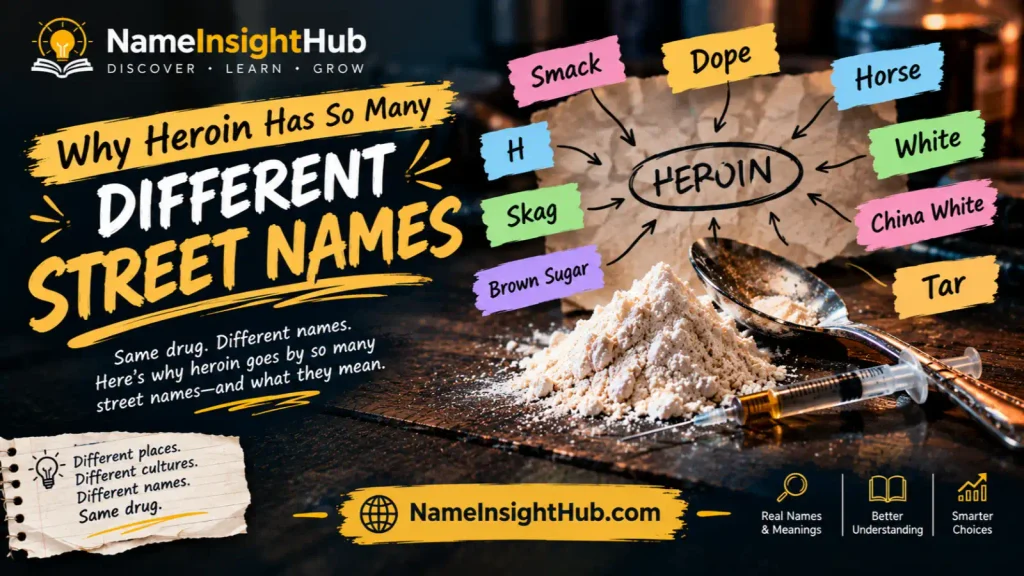
Heroin slang develops through language, local culture, popular media, and changes in the illegal drug market. There is no single official dictionary of street terms, and names can change over time.
Several factors explain this variety.
Regional differences
A term familiar in one city or country may be unfamiliar somewhere else. English-language slang may also differ from terms used in South Asia, Europe, or other regions.
Changes over time
Older terms may remain in films and literature long after people stop using them regularly. New terms can also emerge, but their popularity is difficult to establish without reliable local evidence.
Appearance and composition
Some expressions describe color or texture. However, those characteristics do not reliably identify the drug or its contents.
Popular culture
Movies, songs, news reports, and books can spread particular words. Sometimes a term remains widely recognized in popular culture even when its everyday use is limited.
Coded language
People may use vague or indirect words to discuss sensitive subjects. Yet these words can also refer to ordinary objects, activities, or other substances.
For these reasons, a list of slang terms is best treated as a guide to possible meanings, not as a way to identify drugs with certainty.
Heroin, Fentanyl, and Other Opioids: Understanding the Difference
Heroin is an opioid made from morphine, which is derived from the opium poppy. It affects opioid receptors in the brain and can reduce pain while producing feelings of pleasure or relaxation.
Fentanyl is a different opioid. Pharmaceutical fentanyl has legitimate medical uses, while illegally manufactured fentanyl is involved in many fatal overdoses.
Other opioids include morphine, oxycodone, hydrocodone, and methadone. These drugs differ in their medical uses, chemical structures, and effects.
It is important not to assume that a street name identifies one of these substances accurately.
- Heroin: An opioid derived from morphine.
- Fentanyl: A synthetic opioid that can cause fatal respiratory depression.
- Morphine: An opioid used medically for pain management.
- Oxycodone: A prescription opioid used for certain types of pain.
- Methadone: A medication used for pain in some settings and for treating opioid use disorder.
- Counterfeit pills: Products made to resemble legitimate medication but potentially containing unexpected substances.
Heroin and fentanyl can both slow or stop breathing. Combining opioids with alcohol, benzodiazepines, or other sedating substances can increase the risk of overdose.
No slang term, appearance, or claimed source can guarantee that an illegal drug is free of fentanyl or other dangerous substances.
Signs of a Heroin or Opioid Overdose
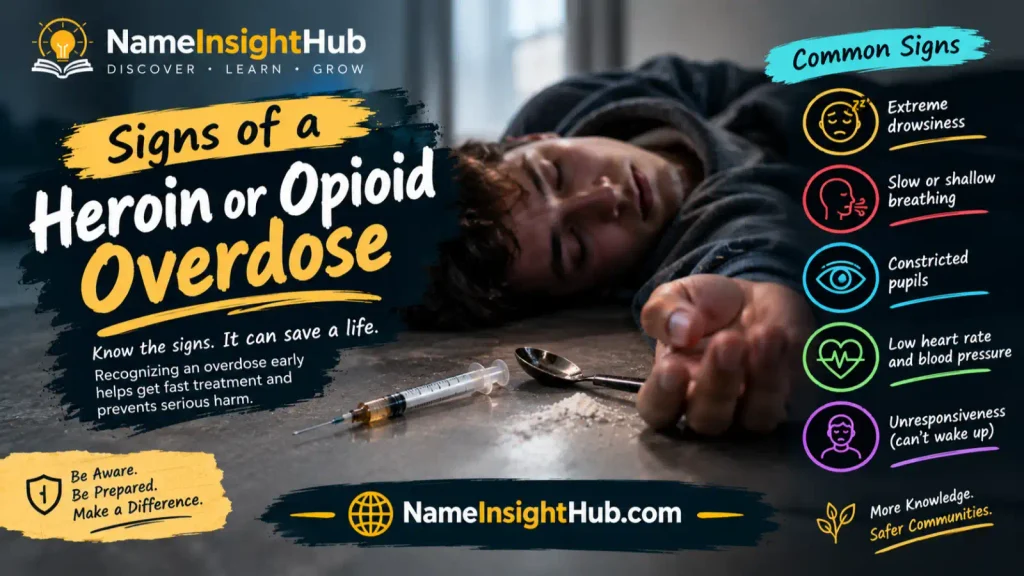
Recognizing an overdose can save a life. Opioids can slow breathing to a dangerously low level, reduce oxygen to the brain, and cause death if emergency treatment is delayed.
Warning signs may include:
- Very slow, shallow, or absent breathing
- Inability to wake the person
- Unusual snoring, choking, or gurgling sounds
- Limp muscles or loss of consciousness
- Blue, gray, or unusually pale lips and nails
- Very small, pinpoint pupils
- A weak response to touch or sound
Not everyone will show every sign. Do not wait for all symptoms to appear before seeking help.
What to do if you suspect an overdose
- Call emergency services immediately. Tell the dispatcher that an opioid overdose is possible and follow their instructions.
- Give naloxone if available. Naloxone is a medication that can reverse an opioid overdose. Follow the product instructions and give additional doses as directed if the person does not respond.
- Support breathing. Follow the emergency dispatcher’s guidance on rescue breathing or CPR, according to your training.
- Stay with the person. If they are breathing but unconscious, follow emergency guidance about positioning them safely.
- Watch for symptoms to return. Naloxone may wear off before the opioid does, so emergency medical care is still essential.
Do not assume someone is simply sleeping or intoxicated if they cannot be awakened. When an overdose is possible, quick action matters.
Getting Help for Heroin Use
Heroin dependence is a health condition, not a moral failure. People can recover, and effective treatments are available.
Treatment may include medication, counseling, medical support, and help with housing or other needs. The best approach depends on the person’s circumstances and health.
Evidence-based treatment options
Buprenorphine is a medication that helps treat opioid use disorder and reduce cravings and withdrawal symptoms.
Methadone is another established treatment. It can help people manage opioid dependence under appropriate medical supervision.
Naltrexone blocks opioid effects and may be an option for some people, but it requires a period without opioids before treatment can begin safely.
Counseling and peer support can also help people build coping skills, strengthen relationships, and maintain recovery.
If you are concerned about someone, approach the conversation calmly. Ask how they are doing, listen without judgment, and offer to help them contact a healthcare professional or addiction treatment service.
If you are worried about your own substance use, you do not need to wait for a crisis to seek help. A healthcare professional can discuss confidential treatment options and help you plan a safe next step.
FAQs:
What is the most common slang name for heroin?
Smack is one of the best-known slang names for heroin in the United States. Other familiar terms include dope, junk, and H. Their meanings vary by context, and some also refer to other drugs.
Is dope another name for heroin?
Sometimes. Dope has historically been used to refer to heroin, but it can also mean other drugs. The word alone does not confirm which substance someone is discussing.
What does brown sugar mean in drug slang?
Brown sugar is sometimes used as a street term for brown-colored heroin. However, the term can have other meanings, and it cannot confirm a substance’s composition or safety.
Is China white always heroin?
No. The term has historically been associated with certain white powders, but its meaning is inconsistent and may refer to synthetic opioids, including fentanyl-related substances. It should never be treated as a reliable chemical identification.
Are heroin street names the same in every country?
No. Drug slang varies by region, language, and time period. A term common in one community may be rare or have a different meaning elsewhere.
Can you identify heroin by its color or texture?
No. Color, texture, and smell cannot reliably establish whether a substance is heroin or identify what else it contains. Laboratory analysis is needed for reliable identification.
What should I do if I think someone has overdosed on heroin?
Call emergency services immediately, give naloxone if available, and follow the dispatcher’s instructions for breathing support and CPR. Stay with the person and seek emergency medical care even if naloxone appears to help.
Is treatment available for heroin addiction?
Yes. Evidence-based options include buprenorphine, methadone, and naltrexone for suitable patients, along with counseling and other support. A qualified healthcare professional can help determine the appropriate treatment.
Conclusion:
Heroin is associated with several street names, including smack, dope, junk, H, and brown sugar. These terms can help readers understand conversations, historical writing, and public health information, but their meanings are not always consistent.
The most important point is that slang cannot confirm a drug’s identity or safety. If your concern involves a possible overdose, seek emergency help immediately.
If heroin use is affecting you or someone you care about, professional treatment and recovery support are available.

I am Naqash Ayub, the creative mind behind NameInsightHub.com, passionate about uncovering the stories, meanings, and unique identities hidden within names. Through my platform, I turn simple names into meaningful insights, blending curiosity, creativity, and originality to help every name tell a story worth discovering.