
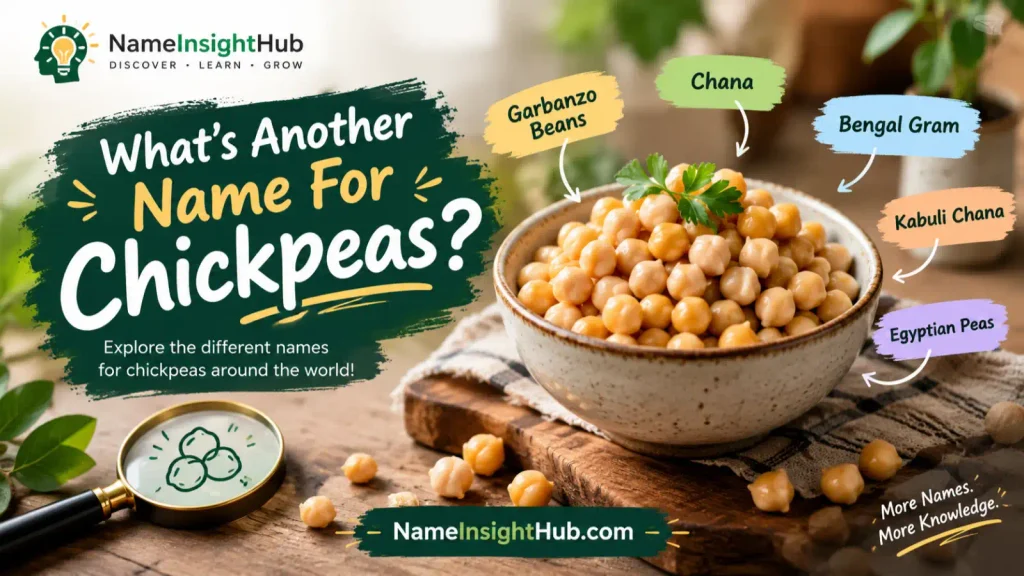
If you have ever followed a hummus recipe, read a Mediterranean menu, or shopped for beans at an international grocery store, you may have seen chickpeas listed under a different name.
So, what’s another name for chickpeas? The most common alternative is garbanzo beans. Both names refer to the same edible legume, known for its mild, nutty flavor and firm, creamy texture.
However, chickpeas have several other names around the world. Their names can vary by language, region, size, and variety. You may encounter terms such as Bengal gram, chana, ceci beans, and Egyptian peas in recipes or food stores.
Garbanzo Beans: The Most Common Alternative Name

Garbanzo beans is the most widely recognized alternative name for chickpeas in the United States. If an American recipe calls for garbanzo beans, you can use ordinary chickpeas without changing the recipe.
The two names refer to the same plant, Cicer arietinum. The difference is mainly linguistic and regional rather than botanical.
Garbanzo beans are common in canned-food aisles, salad recipes, vegetarian meals, and Mediterranean dishes. They have a mild, slightly nutty flavor that works well with spices, herbs, and sauces.
Here are some useful facts about the name:
- Garbanzo beans: A common name used in American grocery stores and recipes.
- Chickpeas: Another standard English name for the same legume.
- Canned garbanzos: Usually cooked chickpeas packed in water, sometimes with salt.
- Dried garbanzos: Uncooked chickpeas that generally need soaking and cooking.
You do not need to buy a special variety when a recipe uses one name instead of the other. Check the package for the product itself, especially if you are buying a less familiar variety.
Example: If a salad recipe calls for one can of chickpeas, a can labeled garbanzo beans is a suitable substitute.
Chana: A Popular Name in South Asian Cooking
Chana is a widely used name for chickpeas in South Asian languages and food traditions. You will see it frequently in Indian, Pakistani, and Bangladeshi recipes.
The word appears in the names of many familiar dishes, including chana masala and chana chaat. These dishes often combine chickpeas with spices, tomatoes, onions, herbs, or tangy sauces.
However, chana does not always refer to exactly the same chickpea variety. In many South Asian markets, it may refer to desi chickpeas or chickpea products prepared in different ways.
Common food terms include:
- Kala chana: Small, dark-brown chickpeas with a firmer texture.
- Kabuli chana: Larger, pale-colored chickpeas commonly used in curries and salads.
- Chana masala: A spiced chickpea curry.
- Chana dal: Split chickpeas, usually made from desi chickpeas after removing the outer skin.
- Roasted chana: Chickpeas roasted until crunchy.
These terms are especially helpful when reading recipes from India or Pakistan. They tell you more about the ingredient or preparation than the word chickpea alone.
For example, kala chana may require a different cooking time from canned Kabuli chickpeas because it is usually sold dried and has a firmer texture.
Ceci Beans: The Italian Name for Chickpeas
Ceci beans is the Italian name commonly used for chickpeas in English-language descriptions of Italian food. In Italian, the singular is cece, while the plural is ceci.
Chickpeas have a long history in Mediterranean cooking. Italian cooks use them in soups, salads, stews, and traditional flour-based dishes.
Popular examples include:
- Pasta e ceci: A comforting pasta and chickpea dish.
- Zuppa di ceci: Italian chickpea soup.
- Ceci salad: A simple salad made with chickpeas, vegetables, herbs, and olive oil.
- Farinata: A savory, thin pancake made from chickpea flour, particularly associated with Ligurian cuisine.
- Cecina: A chickpea-flour flatbread found in parts of Italy.
Ceci beans are not a separate species or a special type of chickpea. The term simply reflects Italian language and culinary tradition.
If you find a bag labeled ceci in an Italian grocery store, you can generally use it wherever a recipe calls for ordinary chickpeas, provided the package contains whole chickpeas rather than chickpea flour or another chickpea product.
Bengal Gram: A Name Used for Desi Chickpeas
Bengal gram is a traditional name associated with desi chickpeas, a smaller variety commonly grown and eaten in South Asia and other regions.
Desi chickpeas usually have a darker, thicker outer skin and a smaller, more angular shape than Kabuli chickpeas. Their flavor is earthy, and they are widely used in curries, roasted snacks, and split pulse dishes.
The term Bengal gram is particularly useful when reading older cookbooks, ingredient labels, or recipes that use South Asian terminology.
Here is how it relates to other chickpea names:
| Name | Typical meaning |
|---|---|
| Bengal gram | Usually refers to desi chickpeas |
| Desi chana | Small, darker chickpeas |
| Kabuli chana | Larger, pale chickpeas |
| Chana dal | Split chickpeas, commonly prepared from desi varieties |
| Chickpea flour | Flour made from ground chickpeas |
One important distinction is that Bengal gram and Kabuli chickpeas are not always interchangeable in every recipe. Although both belong to the chickpea species, their size, skin, texture, and cooking times can differ.
If a recipe calls for Bengal gram, look at the preparation instructions before substituting canned chickpeas.
Egyptian Peas: what’s another name for chickpeas A Historical Alternative Name
Egyptian peas is an older English name associated with chickpeas. It appears in historical food terminology and older references to legumes.
The name reflects the long history of chickpea cultivation and consumption across parts of the Mediterranean and nearby regions. Chickpeas have been grown for thousands of years and became an important ingredient in many traditional food cultures.
Today, Egyptian peas is much less common than chickpeas or garbanzo beans in American supermarkets. You are more likely to encounter it in historical writing, older cookbooks, or traditional descriptions of food.
Keep these points in mind:
- Egyptian peas is a historical alternative name for chickpeas.
- It is not the standard name used on most modern American food labels.
- The term does not necessarily identify a distinct chickpea variety.
- Modern recipes usually use chickpeas or garbanzo beans instead.
If you encounter the term in an old recipe, check the surrounding instructions. In most contexts, it refers to the familiar edible legume rather than green garden peas.
Gram: A Short Name Used in South Asian Food Terms
Gram is a broad term used in South Asian food terminology, especially in ingredient names connected with chickpeas.
You may see it on packages of gram flour, roasted gram, or split pulses. However, gram does not always mean whole chickpeas, so the full product name matters.
Here are some common examples:
- Whole gram: A term that may refer to whole chickpeas in regional food contexts.
- Black gram: Usually refers to urad, a different legume.
- Green gram: Usually refers to mung beans, not chickpeas.
- Gram flour: Often refers to flour made from ground chickpeas, particularly desi chickpeas.
- Roasted gram: A roasted chickpea product used as a snack or ingredient.
- Bengal gram: A name associated with desi chickpeas.
- Split gram: A term used for split pulses, including chickpea products.
- Gram dal: A regional expression that may refer to a split gram preparation.
This distinction is important when shopping. Black gram and green gram are not simply alternative names for chickpeas. They are different legumes with their own flavors and cooking properties.
When a recipe says gram, look for additional words or a description of the ingredient to make sure you choose the correct product.
Ceci, Garbanzo, and Chana: Names in Different Languages
Chickpeas have traveled across cultures, so their names reflect different languages and food traditions. Recognizing these names can make international recipes much easier to follow.
Here are 12 useful terms to know:
- Chickpeas — The standard English name.
- Garbanzo beans — A common alternative name in American English.
- Ceci — The Italian plural form of cece.
- Chana — A common South Asian name.
- Kabuli chana — Larger, pale chickpeas.
- Kala chana — Smaller, darker chickpeas.
- Bengal gram — A name commonly associated with desi chickpeas.
- Cicer arietinum — The scientific name of the chickpea plant.
- Pois chiches — The French name for chickpeas.
- Kichererbsen — The German name for chickpeas.
- Garbanzos — The Spanish plural form of garbanzo.
- Nohut — The Turkish name for chickpeas.
These terms are useful when searching international recipe websites or shopping in stores that carry imported ingredients.
Remember that a name may describe a broad ingredient category, a particular variety, or a prepared product. For example, chana dal is not the same product as whole chickpeas, even though both come from chickpeas.
Kabuli Chana: Large, Pale Chickpeas
Kabuli chana is the name commonly used in South Asia for the larger, cream-colored chickpea variety. It is closely associated with the chickpeas sold in many American grocery stores.
These chickpeas have a relatively thin skin, a rounded shape, and a mild flavor. Their texture becomes tender and creamy after cooking, which makes them useful in a wide range of dishes.
Kabuli chana is often used for:
- Chana masala
- Hummus
- Chickpea salads
- Vegetable curries
- Roasted chickpea snacks
- Chickpea stews
- Grain bowls
- Mediterranean side dishes
- Sandwich fillings
- Vegetarian wraps
The name is especially useful if you are following a South Asian recipe and want to distinguish large chickpeas from kala chana.
For many everyday meals, canned chickpeas are a convenient alternative to dried Kabuli chana. Rinse and drain canned chickpeas if you want to reduce excess salt and remove some of the packing liquid.
Kala Chana: Small, Dark Chickpeas
Kala chana means black chickpeas in common South Asian usage. These chickpeas are generally smaller and darker than Kabuli chana, with a thicker outer skin and a firmer bite.
They are popular in Indian and Pakistani cooking, where they are often simmered with onions, tomatoes, spices, and herbs.
Kala chana is used in several ways:
- Traditional kala chana curry
- Spiced chickpea salads
- Breakfast or snack dishes
- Sprouted legume preparations
- Dry-style chickpea curries
- Soups and stews
- Regional festive meals
- Simple dishes served with flatbread
Because kala chana is often sold dried, it usually needs soaking and thorough cooking. It may remain firmer than ordinary Kabuli chickpeas even after it becomes tender.
Do not confuse kala chana with black gram. Kala chana is a chickpea variety, while black gram is a different legume.
If you are substituting one for the other in a recipe, expect differences in texture, appearance, and cooking time.
Chickpea Flour: A Related Ingredient with a Different Name
Chickpea flour is not another name for whole chickpeas, but it is a closely related product that often appears in recipes and grocery searches.
It is made by grinding chickpeas into a fine powder. In South Asian cooking, flour made from desi chickpeas is commonly called besan. Other chickpea flours may be made from different chickpea varieties.
You may encounter these related terms:
- Besan: Commonly used for flour made from ground desi chickpeas.
- Chickpea flour: A general English name for flour made from chickpeas.
- Gram flour: A term often used for chickpea flour, though its exact meaning can vary by region.
- Garbanzo bean flour: Another English name for chickpea flour.
- Ceci flour: A name sometimes used for chickpea flour in Italian food contexts.
- Socca flour: An informal reference to the flour used to make socca, a chickpea-flour flatbread.
Chickpea flour is useful for making pancakes, fritters, savory batters, flatbreads, and gluten-free recipes.
It cannot be substituted one-for-one for whole chickpeas in a salad or curry. Flour absorbs liquid differently and serves a different purpose in cooking.
Other Chickpea Terms You May See on Food Labels
Some labels use words that describe chickpea products rather than providing a true synonym. Knowing the difference helps you choose the right ingredient.
Here are 12 related terms:
- Canned chickpeas: Chickpeas that have already been cooked and packed in liquid.
- Dried chickpeas: Raw, dried legumes that need cooking.
- Organic chickpeas: Chickpeas produced under applicable organic standards.
- Roasted chickpeas: Chickpeas cooked until crisp.
- Chickpea snacks: Ready-to-eat products made from chickpeas.
- Chickpea puree: Chickpeas mashed or blended into a smooth mixture.
- Chickpea flour: Ground chickpeas used in baking and cooking.
- Chickpea protein: Protein ingredients made from chickpeas.
- Sprouted chickpeas: Chickpeas that have begun to germinate under controlled conditions.
- Split chickpeas: Chickpeas split into smaller pieces, often with the outer skin removed.
- Chickpea pasta: Pasta made partly or primarily from chickpea flour.
- Hummus: A prepared dip traditionally made with chickpeas, tahini, lemon juice, and other ingredients.
These are not all alternative names for the same ingredient. They describe different forms, preparations, or products made from chickpeas.
If you need chickpeas for a specific recipe, read the package carefully. A product made from chickpeas may not behave like whole cooked beans.
Which Chickpea Name Should You Use?
The best term depends on your audience and the context in which you are writing.
For most American readers, chickpeas and garbanzo beans are the clearest options. Both are widely understood, and either works well in recipes, grocery lists, and general food writing.
Use the following guide when choosing a term:
| Situation | Best term |
|---|---|
| General American recipe | Chickpeas |
| American grocery shopping | Chickpeas or garbanzo beans |
| Indian or Pakistani recipe | Chana, Kabuli chana, or kala chana |
| Italian recipe | Ceci |
| Scientific writing | Cicer arietinum |
| Recipe for chickpea flour | Chickpea flour or besan, depending on the product |
| Historical food writing | Egyptian peas, where supported by the source |
| German recipe | Kichererbsen |
| French recipe | Pois chiches |
| Turkish recipe | Nohut |
For SEO content, recipes, and food blogs, it is helpful to mention the most common alternatives naturally. A reader who searches for garbanzo beans should be able to understand that the ingredient is the same as chickpeas.
However, do not treat every related term as an exact synonym. Bengal gram, Kabuli chana, and kala chana can refer to specific chickpea types, while flour, hummus, and roasted chickpeas describe different products or preparations.
How to Choose the Right Chickpeas for Cooking
Once you recognize the names, selecting the right kind becomes easier. The best option depends on the recipe, the texture you want, and the time available.
1. Consider the recipe
For hummus, smooth dips, and many salads, ordinary Kabuli chickpeas are a reliable choice. For a traditional South Asian kala chana curry, use the darker variety if the recipe calls for it.
2. Decide between canned and dried
Canned chickpeas are convenient because they are already cooked. Drain and rinse them before using if desired.
Dried chickpeas are usually more economical per serving and allow you to control their final texture. They generally need soaking and cooking, although the exact method depends on the variety.
3. Check the variety
Large, pale chickpeas are often called Kabuli chana. Smaller, darker chickpeas are commonly called kala chana or desi chickpeas. The variety affects texture, cooking time, and appearance.
4. Read the full label
A package labeled besan, gram flour, or chickpea flour contains a ground product rather than whole beans. Similarly, chana dal is a split pulse, not an ordinary can of whole chickpeas.
5. Choose according to texture
If you want a creamy result, cook the chickpeas until they are very tender. If you want them for a salad, you may prefer them to hold their shape. Roasted chickpeas need a different preparation to achieve a crisp exterior.
A little attention to the product name can prevent confusion and help your recipe turn out as expected.
FAQs:
What is another name for chickpeas?
The most common alternative name is garbanzo beans. Other names include chana, ceci, and Bengal gram, although some of these terms refer to particular varieties or chickpea products.
Are chickpeas and garbanzo beans the same thing?
Yes. Chickpeas and garbanzo beans are two names for the same legume, Cicer arietinum. You can generally use either one in recipes that call for ordinary whole chickpeas.
What are chickpeas called in India and Pakistan?
They are commonly called chana. Larger, pale chickpeas are known as Kabuli chana, while smaller, darker varieties are called kala chana. Chana dal refers to split chickpeas.
What are chickpeas called in Italian?
Chickpeas are called ceci in Italian, the plural of cece. The term appears in traditional dishes such as pasta e ceci and zuppa di ceci.
Are Bengal gram and chickpeas the same?
Bengal gram is a name commonly associated with desi chickpeas. It may refer to whole chickpeas or, depending on the context, products such as split gram. Always check the full ingredient name.
What is the scientific name for chickpeas?
The scientific name is Cicer arietinum. It identifies the chickpea plant and is useful in botanical, agricultural, and scientific writing.
Are chana dal and chickpeas the same?
They come from the same type of legume, but they are not the same product. Chana dal consists of split chickpeas, commonly made from desi varieties, while ordinary chickpeas are usually sold whole.
What is the difference between chickpeas and black gram?
Chickpeas belong to the species Cicer arietinum. Black gram, commonly known as urad, is a different legume. Kala chana is a dark chickpea variety and should not be confused with black gram.
Conclusion:
Chickpeas have several names, but garbanzo beans is the most common alternative in American English. Chana is widely used in South Asian cooking, ceci appears in Italian cuisine, and Bengal gram is associated with desi chickpeas. Other terms describe specific varieties, historical usage, or products made from the legume.
The easiest way to identify the right ingredient is to check the full name on the package and consider how you plan to cook it.
Once you understand these naming differences, reading international recipes and shopping for chickpeas becomes much simpler.

I am Naqash Ayub, the creative mind behind NameInsightHub.com, passionate about uncovering the stories, meanings, and unique identities hidden within names. Through my platform, I turn simple names into meaningful insights, blending curiosity, creativity, and originality to help every name tell a story worth discovering.