
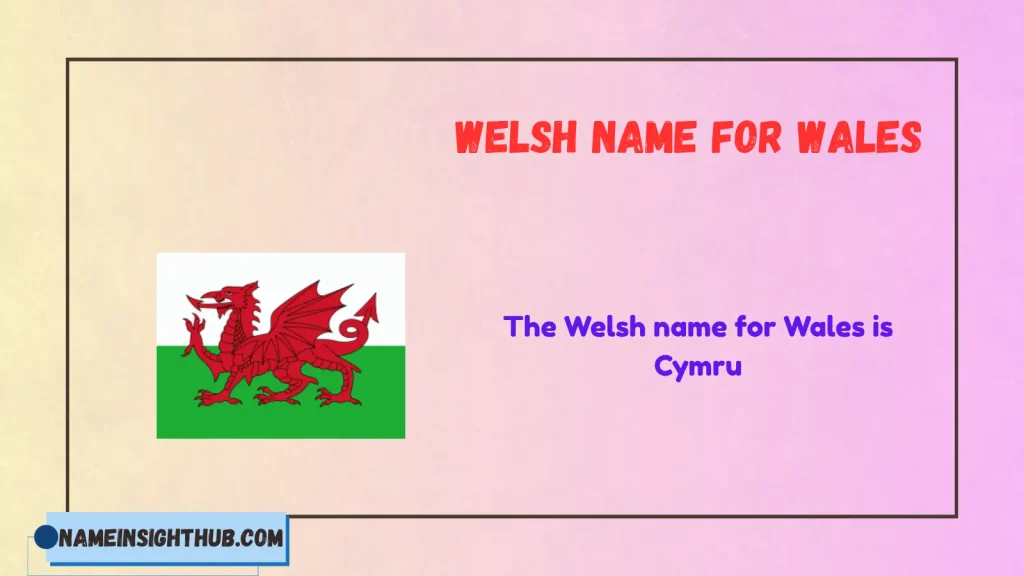
Have you ever wondered what Wales is called by the people who live there? The Welsh name for Wales is Cymru, a word with deep roots in the country’s language, history, and national identity.
While English speakers use the name Wales, Welsh speakers use Cymru to describe their homeland. These two names have different origins, and their stories reveal an interesting part of Welsh history.
Cymru is more than a translation. It reflects the connection between the Welsh people, their Celtic heritage, and their shared culture.
You will also discover the history behind the country’s traditional name and its importance to modern Wales.
What Is the Welsh Name for Wales?
The Welsh name for Wales is Cymru. It is the name Welsh speakers use for their country and is an important part of the Welsh language.
In everyday Welsh, Cymru refers to Wales as a nation. You can see the word on road signs, in news reports, on official websites, and during cultural events.
The word is closely connected to Welsh history and the identity of the people who speak the language.
Here are a few useful facts about the name:
- Welsh name: Cymru
- English name: Wales
- Language: Welsh
- Pronunciation: Roughly KUM-ree
- Related adjective: Cymreig, meaning Welsh
- A Welsh person: Cymro for a man, Cymraes for a woman
Cymru is not a recent invention. It developed from an old Brittonic word associated with fellow countrymen or people who belonged to the same community.
Today, it is the standard Welsh name for the country.
What Does Cymru Mean in English?
The word Cymru is commonly understood as meaning “the land of fellow countrymen” or “the land of compatriots.
Its roots come from the Brittonic word kom-brogī, which is linked to the idea of people belonging to the same country or community.
This meaning is important because it shows how language helped shape Welsh identity. The name was not simply a geographical label. It reflected a sense of belonging among people who shared a culture and language.
The historical development of the word can be understood through these related forms:
- Kom-brogī: An early Brittonic form associated with fellow countrymen.
- Cymry: An older Welsh form referring to the Welsh people.
- Cymru: The modern Welsh name for Wales.
The connection between Cymry and Cymru helps explain why the name is so important. One refers to the people, while the other refers to their homeland.
It also highlights the close relationship between Welsh culture and the Welsh language.
How Do You Pronounce Cymru?
Cymru is usually pronounced KUM-ree by English speakers. The first part sounds like “kum,” while the second part sounds similar to “ree.”
The pronunciation may feel unfamiliar at first because Welsh spelling follows different rules from English.
Here is a simple breakdown:
- Cy: Sounds approximately like “kuh.”
- mru: Creates a sound close to “mree.”
- Full pronunciation: KUM-ree.
The Welsh letter combination is not pronounced like the English word “cyber.” Learning the Welsh pronunciation rules makes the word much easier to say.
A few helpful tips:
- Keep the first syllable short.
- Do not pronounce the C like an S.
- Give the final syllable a clear sound.
- Listen to native Welsh speakers to learn the natural rhythm.
You do not need perfect Welsh pronunciation to appreciate the word. Even learning to say Cymru correctly is a simple way to show interest in Welsh culture.
Why Is Wales Called Cymru in Welsh?
Wales is called Cymru because the name developed from the language and identity of the Brittonic-speaking people who lived in the region.
The history of the name goes back many centuries. Before modern national borders existed, the people of Britain spoke several Celtic languages. Over time, different communities developed their own identities and names.
The word Cymry became associated with the Brittonic people of Wales. The related word Cymru came to refer to their homeland.
This development reflects several important parts of Welsh history:
- Shared ancestry: The name reflects an older sense of belonging among Brittonic communities.
- Language: Welsh preserved the word through centuries of cultural change.
- Identity: The name became a symbol of the Welsh people and their homeland.
- Tradition: It remained in use even as English became more widely spoken.
The name has survived major changes in politics, society, and language. It remains a strong symbol of Welsh national identity today.
Where Did the English Name Wales Come From?
The English name Wales has a very different origin from Cymru. It comes from an Old English word, Wealas, which was used to describe foreigners or people who spoke a Celtic or other non-Germanic language.
The word was related to an older Germanic term, Walhaz, which referred to people who were not part of the Germanic-speaking communities.
As Anglo-Saxon groups settled in Britain, they used this term to describe the native Brittonic-speaking people. Over time, the word developed into the English name Wales.
Here is a simple look at its history:
- Walhaz: An early Germanic term associated with foreign or non-Germanic peoples.
- Wealas: The Old English form used for Brittonic-speaking people.
- Wales: The modern English name for the country.
Interestingly, similar word roots appear in other European place names, including Wallonia and Wallachia.
This shows that the English name for Wales developed from the perspective of outsiders, while Cymru grew from the identity of the people themselves.
What Is the Difference Between Cymru and Wales?
Cymru and Wales refer to the same country, but they come from different languages and historical backgrounds.
Cymru is the native Welsh name, while Wales is the English name. Both are correct, and both are widely recognized.
The main difference is their linguistic origin and cultural history.
| Feature | Cymru | Wales |
|---|---|---|
| Language | Welsh | English |
| Origin | Brittonic and Welsh | Old English |
| Meaning | Land of fellow countrymen | Connected to an old term for foreigners |
| Usage | Welsh-speaking communities | English-speaking communities |
| Pronunciation | KUM-ree | WAYLZ |
There is also an interesting difference in cultural meaning.
Cymru reflects how the Welsh people have traditionally identified their homeland. Wales reflects the name that developed through English historical usage.
Neither name is incorrect. The choice simply depends on the language and context.
What Are Some Other Welsh Words Related to Cymru?
Learning a few related Welsh words can help you understand how the name is used in everyday conversation.
Welsh is a Celtic language with its own grammar, spelling rules, and pronunciation patterns. Many words connected to Wales and Welsh identity come from the same linguistic tradition as Cymru.
Here are some useful words to know:
- Cymry: The Welsh people.
- Cymro: A Welsh man.
- Cymraes: A Welsh woman.
- Cymreig: Welsh, relating to Welsh culture or language.
- Cymraeg: The Welsh language.
- Y Gymraeg: The Welsh language.
- Cymru: Wales.
- Yng Nghymru: In Wales.
- O Gymru: From Wales.
- Pobl Cymru: The people of Wales.
- Croeso: Welcome.
- Diolch: Thank you.
- Bore da: Good morning.
- Nos da: Good night.
- Hwyl: Goodbye or fun, depending on context.
These words are useful for anyone interested in learning basic Welsh or understanding Welsh signs, conversations, and cultural references.
Is Cymru an Official Name for Wales?
Yes. Cymru is the Welsh-language name used in official and everyday settings.
The Welsh and English languages are both official languages in Wales under Welsh law. As a result, both Cymru and Wales appear in government communication, public services, and national institutions.
You can find Cymru in several places:
- Welsh government websites.
- Official documents written in Welsh.
- Public road signs.
- Schools and universities.
- Welsh-language newspapers.
- Cultural festivals and sporting events.
- National organizations and community groups.
For example, the Welsh Government uses the name Llywodraeth Cymru in Welsh.
The name is also common in sports. Welsh national teams and supporters often use Cymru when representing their country.
This continued use shows that the word is not simply a historical term. It remains an active part of modern Welsh life.
What Is the Welsh Name for the Welsh People?
The Welsh people are known as Cymry in Welsh.
The word is closely connected to Cymru, the Welsh name for the country. Both words share the same historical roots and express a connection between people and their homeland.
Welsh also has different words for individual people:
- Cymro: A Welsh man.
- Cymraes: A Welsh woman.
- Cymry: The Welsh people.
- Cymraeg: The Welsh language.
- Cymreig: Welsh in the sense of relating to Welsh culture.
These forms are useful because they show how the Welsh language changes words depending on their meaning and grammatical role.
For example, someone might use Cymry when talking about the Welsh population as a whole, but Cymro when referring to a Welsh man.
Is Cymru the Same as the Ancient Name Cambria?
Cymru and Cambria are related to the same broader Welsh and Brittonic naming tradition, but they are not exactly the same word in modern usage.
Cambria is a Latinized name for Wales. It developed from a form related to Cymry and was used in historical and literary writing.
Writers used Cambria in Latin texts, maps, and descriptions of Welsh history. It became a familiar alternative name for Wales in certain historical contexts.
The distinction is simple:
- Cymru: The modern Welsh name for Wales.
- Cymry: The Welsh people.
- Cambria: A Latinized historical name for Wales.
- Cambric: A historical English adjective associated with Wales, although its uses have varied.
Cambria is particularly interesting for people studying medieval literature and historical geography.
It should not be confused with Cymru itself. Cymru is the name Welsh speakers use today, while Cambria belongs mainly to Latin and historical traditions.
How Has the Name Cymru Survived Through History?
The survival of Cymru is closely connected to the continued use of the Welsh language.
Wales experienced major political and cultural changes over many centuries. English gradually became more influential in government, education, and public life. However, Welsh continued to be spoken in communities across the country.
Several factors helped preserve the name.
Strong language traditions
Families and communities passed Welsh down through generations. This kept traditional words alive even when English became more common in official settings.
Welsh literature and poetry
Welsh writers and poets helped preserve the language through songs, poems, stories, and historical writing.
Cultural identity
Cymru remained a meaningful expression of belonging. It connected people to their history, language, and shared traditions.
Modern language support
Welsh-language education, broadcasting, public services, and cultural organizations have helped strengthen the language in modern society.
Today, Cymru remains an important part of Wales’s national identity. Its use shows how a traditional name can survive and remain relevant in everyday life.
How to Use Cymru Correctly in a Sentence
If you are learning Welsh or writing about the country, it helps to understand how Cymru appears in common expressions.
Here are some simple examples:
- Dw i’n byw yng Nghymru. This means “I live in Wales.”
- Dw i’n dod o Gymru. This means “I come from Wales.”
- Cymru yw fy ngwlad. This means “Wales is my country.”
- Pobl Cymru. This means “The people of Wales.”
- Croeso i Gymru. This means “Welcome to Wales.”
Notice that Cymru can change to forms such as Nghymru and Gymru depending on the grammatical context.
This is a normal feature of Welsh grammar. The form of a word can change depending on the words around it.
If you are writing a simple English article, you can use Cymru as the Welsh name for Wales without needing to learn every grammatical rule.
FAQs:
What is the Welsh name for Wales?
The Welsh name for Wales is Cymru. It is used by Welsh speakers in everyday conversations, official communication, and cultural events. The name is connected to an old word meaning fellow countrymen or compatriots.
What does Cymru mean in English?
Cymru is commonly translated as “the land of fellow countrymen.” It comes from an old Brittonic word associated with people belonging to the same community or homeland.
How do you say Cymru in English?
Cymru is pronounced approximately KUM-ree in English. The first syllable sounds like “kum,” and the second sounds like “ree.” Listening to a native Welsh speaker can help you learn the natural pronunciation.
Why do Welsh people call Wales Cymru?
The name comes from the historical identity of the Brittonic-speaking people of the region. Over time, the word Cymry became associated with the Welsh people, while Cymru became the name of their homeland.
Is Cymru older than Wales?
The two names have different origins. Cymru developed from the Brittonic and Welsh linguistic tradition, while Wales developed from the Old English word Wealas. Both have long histories, so it is more accurate to describe them as names from different language traditions than to say one simply replaced the other.
What is the difference between Cymry and Cymru?
Cymry refers to the Welsh people, while Cymru refers to Wales itself. The words share historical roots but have different meanings and uses in the Welsh language.
What was Wales called in Latin?
Wales was known as Cambria in Latin historical and literary traditions. Another important Latin-related name is Wallia, which appeared in some historical texts. Cambria is particularly familiar in older references to Welsh history.
Do people still use the word Cymru today?
Yes. Cymru is widely used today in Welsh conversations, government communication, road signs, education, sports, and cultural events. It is the standard Welsh name for the country.
Conclusion:
The name Cymru carries a meaningful connection to Welsh language, history, and national identity. While English speakers call the country Wales, Welsh speakers use a name that reflects their own cultural roots and shared heritage.
The English name developed from an Old English term used for non-Germanic peoples, while Cymru grew from an older Brittonic expression connected with fellow countrymen.
Learning the difference between these names offers a simple way to understand Wales more deeply. If you want to explore Welsh culture, start with Cymru, learn how to pronounce it, and discover the language and traditions behind this historic name.

I am Naqash Ayub, the creative mind behind NameInsightHub.com, passionate about uncovering the stories, meanings, and unique identities hidden within names. Through my platform, I turn simple names into meaningful insights, blending curiosity, creativity, and originality to help every name tell a story worth discovering.